



Welcome to a game safari and experience the animals up close!
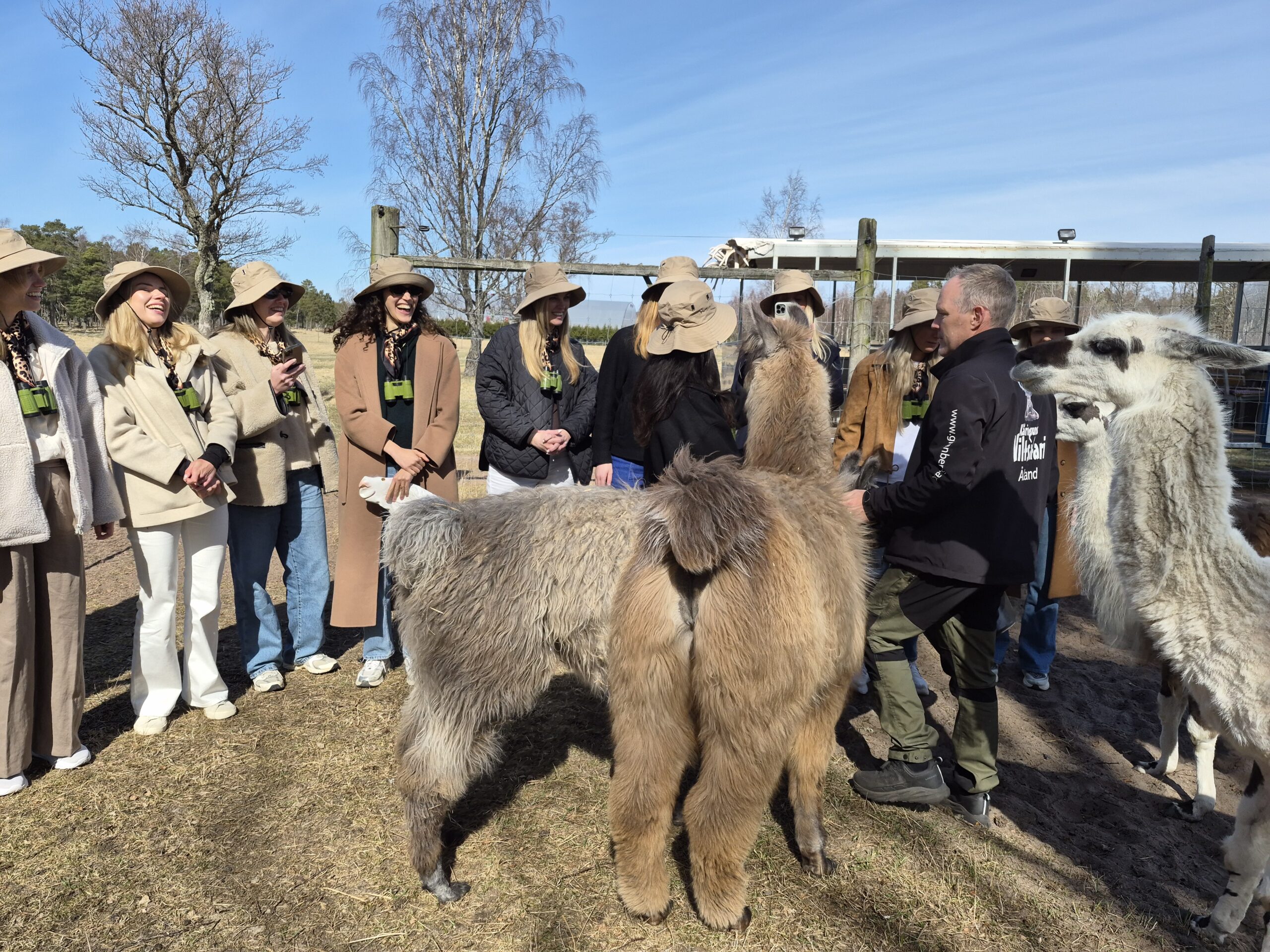
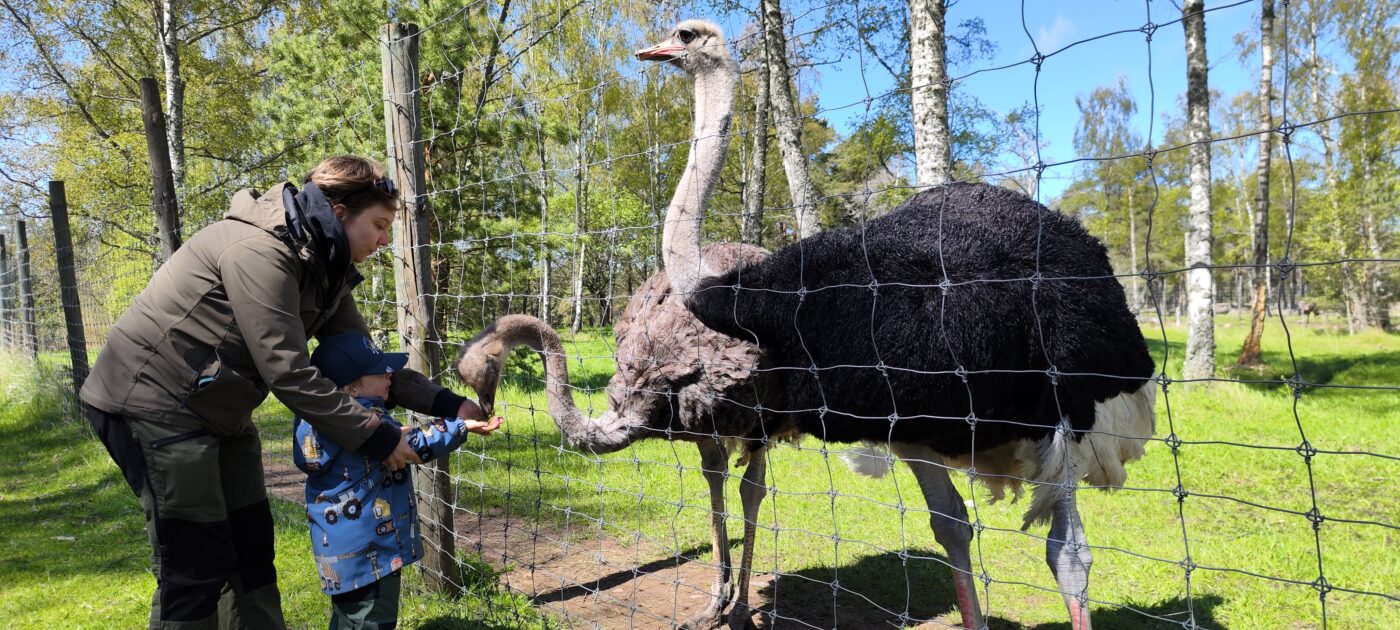
Join us on our safari wagon, which takes about 40 persons, on an unforgettable guided tour through our 34 hectare game enclosure, along a hilly road, trough forest and around lakes. Here you will see red deer, fallow deer, wild boar, ostriches and llamas. During the tour, we make stops to see the animals closer, giving you a unique opportunity to experience them really up close while learning about the differnt animals. You will also be able to feed several of the animals.
The safari takes about 45 minutes and starts nearby the Hunting & Fishing Museum in Käringsund, Eckerö.
Timetable 2027
| 11.6 – 24.6: | 11.00, 12.00, 13.00 daily |
| 25.6: | Midsummer eve 25.6 closed |
| 26.6 – 7.8: | 11.00, 12.00, 13.00, 14.00, 15.00 daily |
| 8.8 – 14.8: | 11.00, 12.00, 13.00 daily |
With reservation for possible time changes.
For opening hours in addition to regular hours: please see our Facebook or Instagram!
Price list 2027
| Adults: | 18€ |
| Children 7-14 years of age, accompanied by their parents: | 14€ |
| Children 3-6 år years of age, accompanied by their parents: | 9€ |
| Groups (minimum 16 persons): | 16€ / Person |
| School groups (minimum 16 persons): | 14€ / Person |
Safarishop
In the safari shop you can buy our popular meat products; game sausages, smoked deer and wildboar meat, ostrich eggs. You can also buy for example coffee, ice cream, souvenirs and cuddle toys.
Groups / School classes
Outside of the regular schedule, we are happy to accept group bookings as long as the weather permits. Generally, it works well during April-October. It can be birthday parties, hen parties, company events or why not a private tour where you get a little extra time and the opportunity to get even closer to the animals.
Booking: viltsafari@aland.net
Telephone number to the safari according to the timetable
+358 457 3460060
Other times: +358 457 3435996
It is not necessary to book places in advance. However, if you are a larger party, you can book via Facebook (messenger), E-mail: viltsafari@aland.net or call the safari shop during opening hours (see timetable).
You meet these animals on the safari:
Red deer
Red deer is the world’s third largest cervid animals. The male is 175 to 225 cm long from nose to tail, tail length is approximately 15 cm. The height is between 130 and 160 cm and a normal deer weighs about 200 kg. The female (doe) is considerably less, the body weight is about half of the male’s weight. Red deer feed on grass, herbs, leaves, twigs, buds, mushrooms, beech and acorns and bark especially spruce and beech.


Fallow deer
Fallow deer is a deer which is less than the stag.The fallow deer originally from the Mediterranean region, but is widespread through central Europe. Males weigh about 100-120 kg, while females (hinds) 60-80 kg. Fallow deer normally eat grass and leaves.
Wild boar
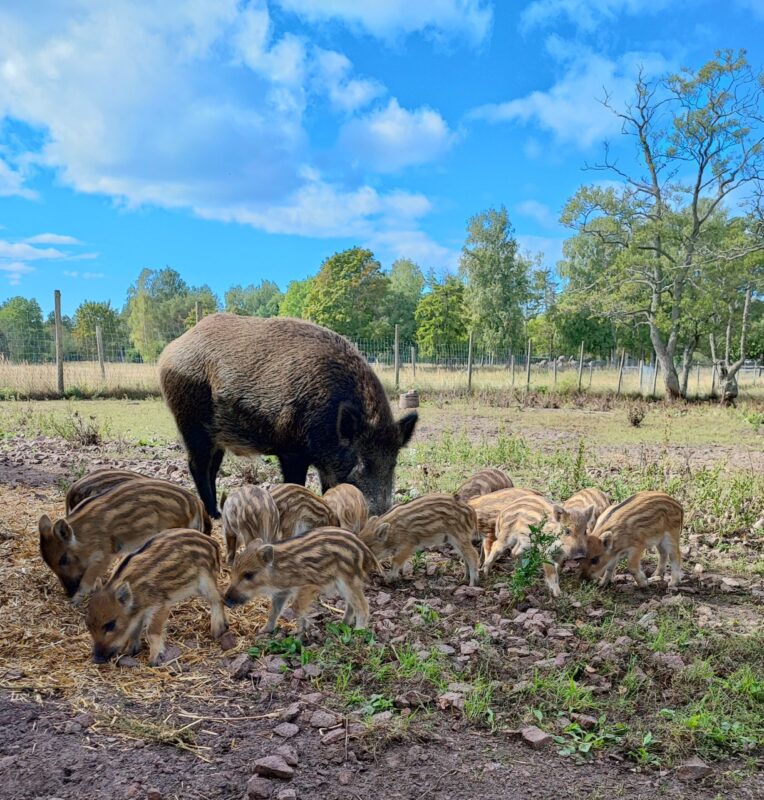
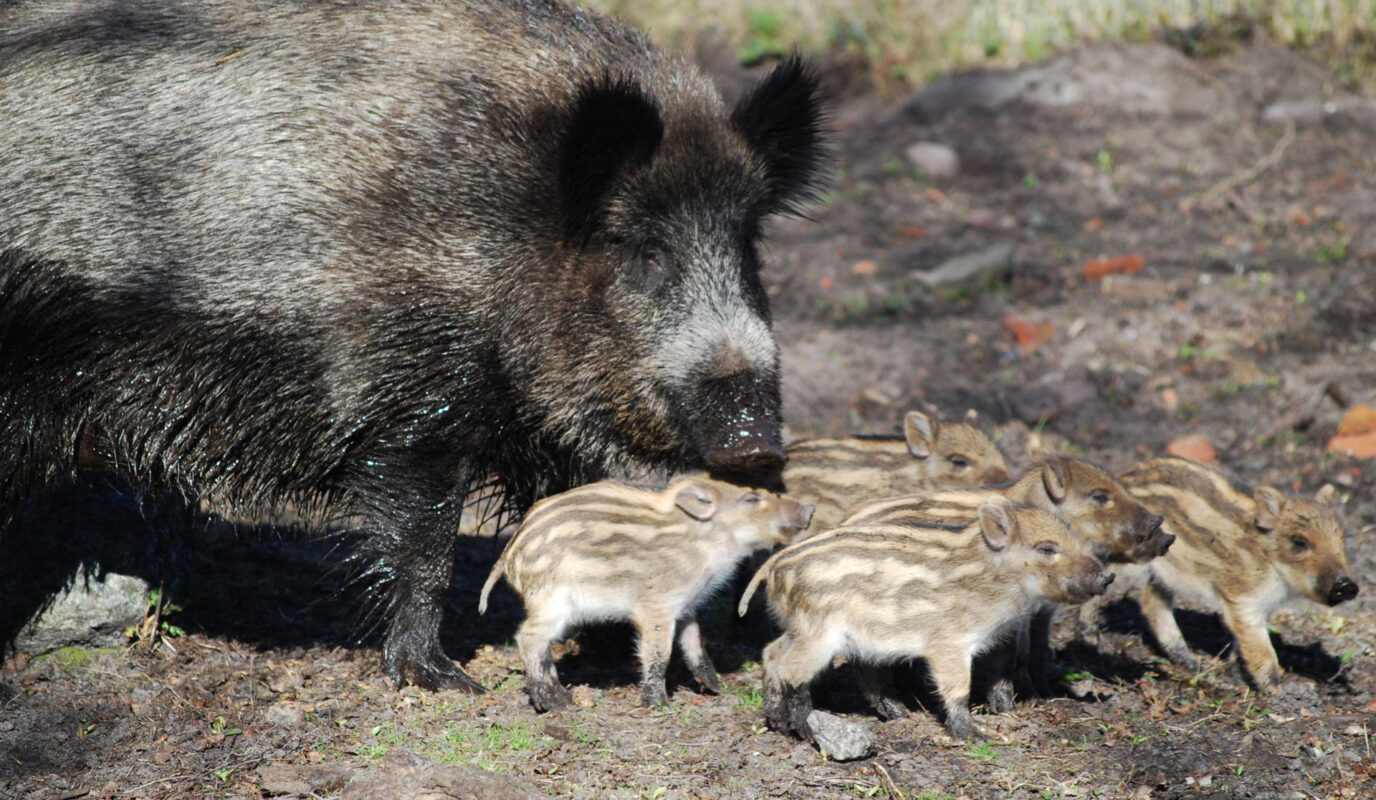
Wild boar is a biungulate animal of the same species as domestic swine. The species’ original range stretched from Western Europe to Southeast Asia, but are now almost all over the world. A sexually mature male is called boar and is between 150 and 180 cm long and 70 to 100 cm high. Boar weighing up to 225 kg, while the sow weighing between 70-140 kg. Wild boar have pretty bad eyesight (though not as bad as rumor has it) but a good hearing and an extremely good sense of smell. The pigs can smell a man of nearly one kilometer away if the wind is right. Wild boar can be about 30 years. Wild boar are omnivorous, but 90% of their diet consists of plant foods.

Ostrich
Ostrich is a very large, long-legged and long-necked bird species present in Africa. The ostrich is the largest living bird and also adds the largest eggs. They can not fly but can run at speeds up to 65 km / h. The diet consists mainly of various parts of plants, but also insects, worms and grubs.
Llama
The llama (Lama glama) is a domesticated South American camelid, widely used as a meat and pack animal by Andean cultures since pre-Hispanic times. The wool produced by a llama is very soft and lanolin-free. Llamas are intelligent and can learn simple tasks after a few repetitions. They are extremely curious and most will approach people easily. When correctly reared, llamas spitting at a human is a rare thing. Llamas are very social herd animals, however, and do sometimes spit at each other as a way of disciplining lower-ranked llamas in the herd.
